Episode Transcript
[00:00:00] Speaker A: Welcome back to the Deep Dive. If you are a fellow curious mind who, you know, loves dissecting how the world actually works behind the scenes, you are exactly in the right place today.
[00:00:11] Speaker B: Yeah, we've got some genuinely mind bending stuff to get into.
[00:00:14] Speaker A: We really do. But before we jump in, just a really quick word from the sponsor making this Deep Dive possible. And that is 337Media.
[00:00:23] Speaker B: Oh, yeah, they do great work.
[00:00:25] Speaker A: They absolutely do. Like, if you're looking at the Acadiana Business Landscape, 337 Media and is, well, they're the engine behind some of the most successful brands out there right now.
[00:00:35] Speaker B: Right. Because they specialize in building those really beautiful websites and, you know, driving local SEO that actually gets real results.
[00:00:42] Speaker A: Exactly. And supporting the local businesses that support our information pipeline is just huge. So definitely check out their link in the description to give them a visit.
[00:00:50] Speaker B: We're definitely going to need that kind of clear headed local perspective for what we are unpacking today, I think for sure.
[00:00:57] Speaker A: So the mission for today's Deep Dive is we're exploring a highly specific stack of tactical guides, corporate protocols and legal frameworks from Lafayette Process Servers LLC and their Baton Rouge affiliate.
[00:01:10] Speaker B: Right. These are dated March 2026.
[00:01:12] Speaker A: Yes. Very recent. And these materials essentially give us this masterclass on what it actually takes to operate inside the 19th Judicial District Court, the 19th JDC. Right now.
[00:01:25] Speaker B: It's a completely different world down there now.
[00:01:26] Speaker A: It really is. And you know, just to set the stage for you, you basically have to forget everything Hollywood has taught you about the legal system. Like, we all know that classic movie trope, right?
[00:01:35] Speaker B: Oh, the guy in the beige trench coat.
[00:01:37] Speaker A: Yeah, the guy who corners someone on the street, tosses a manila envelope at their chest, yells, you've been served. And just walks away while dramatic music plays.
[00:01:45] Speaker B: Right. Which is just hilarious to think about
[00:01:47] Speaker A: now it's so obsolete.
Because when you step into the actual real world landscape of legal logistics in the year 2026, serving legal documents has evolved into this. Well, it's a high stakes hyper tactical game of digital espionage, blockchain verification, and completely unforgiving statutory compliance.
[00:02:09] Speaker B: It's intense and we are looking at a legal system that is actively battling a modern crisis of evasion. Yeah. The people being sued have essentially weaponized technology to become invisible.
And the courts have had to authorize some incredibly extreme measures just to hand a piece of paper to another human being.
[00:02:26] Speaker A: Okay, let's unpack this. Because to really grasp the intensity of the tactics these process servers are using, we first have to understand how easy it's become for a target to just, you know, vanish in plain sight.
[00:02:38] Speaker B: Exactly. In East Baton Rouge, they're dealing with this massive issue called the non est crisis.
[00:02:42] Speaker A: And non est basically just means the person couldn't be found.
[00:02:44] Speaker B: Right, Right, exactly. And in high net worth areas, defendants are literally turning their properties into digital fortresses.
[00:02:50] Speaker A: They're using smart home surveillance, interconnected ring cameras, encrypted communication networks, just actively monitoring the entire perimeter of their homes.
[00:03:01] Speaker B: Yeah. The second a process server walks up a driveway with a clipboard, the target gets an alert Right. On their phone.
[00:03:08] Speaker A: They could just be sitting on their couch watching a live feed of the front door, and they just refuse to answer it.
[00:03:12] Speaker B: Right.
[00:03:13] Speaker A: It's like playing a game of hide and seek. But the person hiding has, like, a live satellite feed of the seeker.
[00:03:19] Speaker B: That is a brilliant way to visualize it, honestly, because the perimeter of evasion, it used to be the front porch, but now, now it's expanded to the very edges of the property line, and it's entirely digitized.
[00:03:32] Speaker A: Okay, but I get that the technology is new, but let me push back on this a little bit.
[00:03:35] Speaker B: Sure.
[00:03:35] Speaker A: Isn't someone simply not answering the door a tale as old as time? I mean, people have been peeking through the blinds, telling their kids to be quiet and pretending not to be home for decades.
Why is this suddenly a full blown crisis in 2026?
[00:03:50] Speaker B: Well, it's a completely fair question. The difference now is the scale and honestly, the financial impact. This isn't just about avoiding an uncomfortable conversation at the door anymore.
This kind of sophisticated tech enabled evasion, it completely stalls cases.
[00:04:05] Speaker A: Right. It jams up the whole system.
[00:04:07] Speaker B: Exactly. It creates a massive bottleneck in the judicial system, and it drives up litigation costs exponentially for the plaintiffs.
And because of that, the burden of proof has entirely shifted.
[00:04:19] Speaker A: So you can't just knock and walk away anymore.
[00:04:21] Speaker B: No, absolutely not. It's no longer enough for a process server to just show up, try the doorknob, shrug, and write down nobody was home. The courts just won't accept that.
[00:04:29] Speaker A: So what do they have to do?
[00:04:31] Speaker B: Legal logistics today require what professionals call tactical visibility and digital harvesting.
[00:04:37] Speaker A: Wow.
[00:04:38] Speaker B: Yeah. They have to actively outmaneuver individuals who fall, fundamentally believe they are untouchable.
[00:04:43] Speaker A: Right. So physical evasion is easier than ever with all these smart home gadgets. But what happens when the target makes a mistake? What happens when they actually are caught on camera by the process server?
[00:04:54] Speaker B: Well, this is where it gets crazy,
[00:04:55] Speaker A: because this is the part of our research that absolutely blew my mind. When these evasive subjects in East Baton Rouge Parish are finally photographed being served, they don't just accept defeat.
[00:05:06] Speaker B: No, they go on the offensive.
[00:05:07] Speaker A: They attack the evidence itself. They are actively filing motions to quash the service.
In their defense, they're looking the judge dead in the eye and claiming the process server's photographs are AI generated deepfakes.
[00:05:21] Speaker B: Yes. They are literally standing in a courtroom saying, you, Honor, you know how advanced AI is. Now, that looks like me. But I wasn't there. The process server just used an AI image generator to frame me.
[00:05:34] Speaker A: That is wild to me. Like the sheer audacity to just claim reality as a deepfake to get out of a lawsuit. But again, I mean, from a judge's perspective, how do you even counter that?
[00:05:43] Speaker B: It's tough. Right, because judges aren't always tech experts.
[00:05:46] Speaker A: Exactly. And deepfakes in 2026 are incredibly convincing. If a wealthy defendant with a slick lawyer introduces that reasonable doubt, it could completely derail a million dollar case.
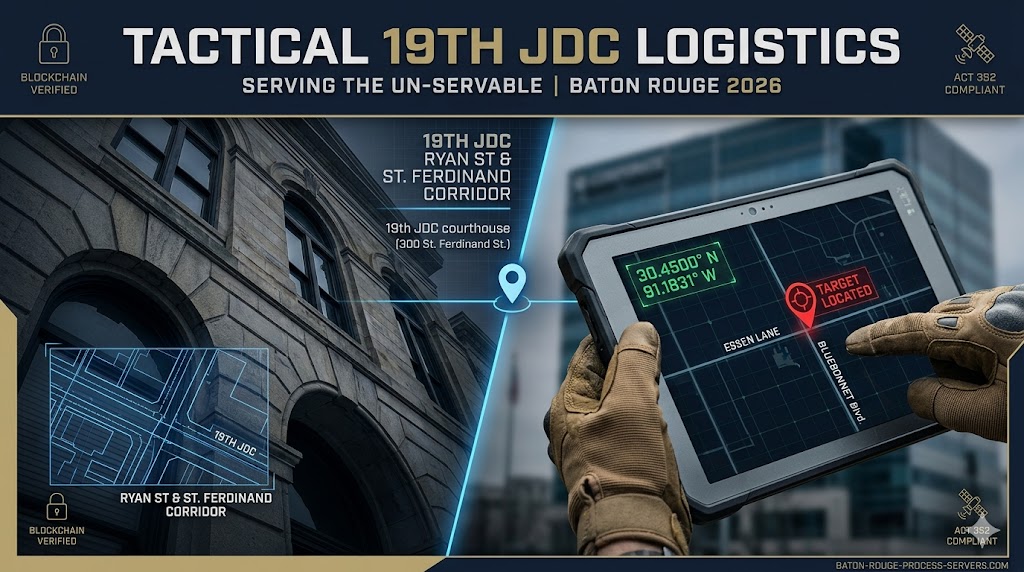
[00:05:57] Speaker B: What's fascinating here is how the Pacific legal loophole triggered a full blown technological arms race. Yeah, you simply cannot present a standard digital photograph in court anymore and expect it to hold up. So, to counter this, Lafayette Process Servers deployed what is known as the Truth Engine Protocol.
[00:06:14] Speaker A: The Truth Engine Protocol.
[00:06:16] Speaker B: Right. It's a direct tactical response to the environment following the March 2026 Google Truth Engine update. To completely neutralize these deepfake allegations, modern process servers have integrated immutable blockchain ledgers into their daily field operations.
[00:06:32] Speaker A: Wait, pause for you and me and anyone listening who hears the word blockchain and instantly just thinks of cryptocurrency and Bitcoin. How does this actually work?
[00:06:42] Speaker B: It's a common misconception.
[00:06:43] Speaker A: Are they turning a photograph of a guy in a driveway into a math equation? How does that prove anything to a judge?
[00:06:49] Speaker B: Well, that's exactly what they are doing. They aren't using the currency aspect of the blockchain. They were using the underlying cryptography.
[00:06:56] Speaker A: Okay, walk me through that.
[00:06:57] Speaker B: Here's how the mechanism works.
The moment a field agent takes a photograph of a target being served, that image file is instantly hashed.
[00:07:05] Speaker A: Hashed?
[00:07:06] Speaker B: Yeah. Yeah. Hashing means running the data of that photo through a cryptographic algorithm that spits out a unique fixed length string of characters. It's basically a mathematical fingerprint.
[00:07:17] Speaker A: So it's locked in.
[00:07:18] Speaker B: Exactly. If even a single pixel of that image is altered by AI later, the hash completely changes. You lock that original hash onto a public blockchain ledger, which cannot be edited or tampered. With by anyone.
[00:07:31] Speaker A: Wow. Okay, so you lock in the exact
[00:07:33] Speaker B: original image, but they don't stop there. They also attach GPS stamped geofencing coordinates to that blockchain entry.
[00:07:40] Speaker A: Really?
[00:07:41] Speaker B: Yes. We see this happening constantly along major commercial sectors, specifically the Cajun Industries or our lady of the Lake corridors. The server's device pings the local cell towers and satellites, cryptographically tying the photograph to those exact physical coordinates at that exact millisecond in time.
[00:07:57] Speaker A: Imagine that for a second. Like, think about your own life and imagine a world where you as a citizen or a lawyer or a.
Cannot even trust a basic photograph without mathematical cryptographic proof of physical proximity.
[00:08:09] Speaker B: It really does completely redefine the concept of a fact in a court of law.
[00:08:13] Speaker A: It does.
[00:08:14] Speaker B: By hashing this metadata to an immutable ledger, process servers are providing Baton Rouge attorneys with a truth signal.
[00:08:21] Speaker A: A truth signal. I like that.
[00:08:23] Speaker B: It mathematically proves physical proximity to the subject. This makes the return of service absolutely bulletproof. Under judicial scrutiny. When the lawyers present it at the courthouse at 300St. Ferdinand street, the defendant can scream deep fake all they want, but the math proves they were standing right there.
[00:08:41] Speaker A: Here's where it gets really interesting, though. Because establishing a mathematical prep of service is brilliant, but it only works if you actually find the person.
[00:08:49] Speaker B: Right. You still have to hand them the paper.
[00:08:51] Speaker A: Exactly. So how do these agents physically corner these highly sophisticated targets in the first place? Especially the executives hiding behind massive corporate walls or people in heav heavily gated residential communities?
[00:09:03] Speaker B: Well, you have to bypass the structural defenses. The operational protocols outline a highly specific tactical approach for this, particularly along the massive commercial corridors in Baton Rouge. Places like Essen Lane, Bluebonnet, Bleevy and United Plaza. Bleviti.
[00:09:19] Speaker A: Yeah, because the corporate executives and the registered agents working in those areas, they've developed their own evasion routine.
[00:09:26] Speaker B: Oh, absolutely.
[00:09:27] Speaker A: They use what are called phantom lunch hours, where they just slip out through private garage elevators and midday security lockdowns where the lobby receptionists act as a. Like a bureaucratic shield.
[00:09:37] Speaker B: They're very good at hiding.
[00:09:39] Speaker A: Basically, they just disappear into the corporate machinery to dodge the process servers.
So to counter this, Scott Frank's tactical units execute a maneuver called a calculated strike time.
[00:09:51] Speaker B: A calculated strike time?
[00:09:53] Speaker A: Yeah. They schedule corporate service for these corridors at exactly 10:30am and the behavioral science
[00:09:59] Speaker B: behind that specific timing is brilliant.
[00:10:01] Speaker A: Because why 10:30? Right.
[00:10:03] Speaker B: Right. Why 10:30am because it is an incredibly vulnerable window for a corporate target. It precedes all of those midday security lockdowns and phantom lunch hours. You just Mentioned.
[00:10:14] Speaker A: Oh, that makes sense.
[00:10:15] Speaker B: Furthermore, think about Office Psychology.
At 10:30am registered agents and executives have usually finished their first cup of coffee and are typically locked into their morning correspondence routines.
[00:10:27] Speaker A: Sitting at their desks.
[00:10:29] Speaker B: Sitting at their desks, checking emails, clearing their morning queues.
[00:10:32] Speaker A: So they are completely static and entirely predictable.
[00:10:35] Speaker B: Exactly. They're anchored to their chairs.
By striking at exactly 10:30am the tactical units completely eliminate the not in office defense that so often stalls these 19th JDC filings.
[00:10:49] Speaker A: Okay, I get that for corporate offices, but I'm hung up on the gated communities though.
[00:10:53] Speaker B: Ah, the fortresses.
[00:10:54] Speaker A: Yeah, because you can have all the 10:30am strike times in the world, but if a security guard at a private neighborhood won't lift the boom gate, your blockchain tech is totally useless.
[00:11:04] Speaker B: Very true.
[00:11:05] Speaker A: The source material brings up Louisiana CCP Article 1293. So how are they legally getting past private, heavily funded security forces?
[00:11:13] Speaker B: Well, that's exactly where the system used to break down. But CCP Article 1293 is the ultimate bypass.
[00:11:18] Speaker A: Okay, how so?
[00:11:19] Speaker B: When dealing with fortress like residential neighborhoods, specifically places like the Country Club of Louisiana or University Club, most standard delivery drivers or rookie process servers just get turned away.
[00:11:32] Speaker A: Right?
[00:11:32] Speaker B: A security guard says, no, you're not on the list, then they have to leave. But elite units like Lafayette Process Servers and their Baton Rouge affiliates don't ask security guards for permission.
[00:11:43] Speaker A: Wait, they don't ask? They just roll up?
[00:11:44] Speaker B: They don't have to ask. Under CCP Article 1293, they are operating under specialized court appointed authority.
[00:11:51] Speaker A: Oh, wow.
[00:11:52] Speaker B: They aren't just visitors, they are agents of the court. They present a digital court mandate, usually right on an iPad, to the security personnel. That statute acts as a literal legal skeleton key for zero delay entry.
[00:12:05] Speaker A: So the guards can't do anything.
[00:12:07] Speaker B: The security guard has no legal right to stop them. They bypass the gate and guarantee delivery right to the front door of the estate.
[00:12:13] Speaker A: Man, it feels exactly like one of those surgically timed heist movies. You know the scene, the team syncs their watches, uses a clone digital key card to bypass the vault security, while walks right past the guards and hits the target at the exact perfect second.
[00:12:28] Speaker B: I can picture it perfectly.
[00:12:30] Speaker A: Except here, instead of stealing millions of dollars, they are forcefully gifting you a lawsuit.
[00:12:35] Speaker B: That is a very apt comparison. Honestly, it requires that exact same level of multidisciplinary coordination.
[00:12:42] Speaker A: Yeah, but.
[00:12:43] Speaker B: And this is a massive G but. Finding the target, catching them at their desk at 10:30am bypassing the gate guards and proving the encounter on an immutable Blockchain is all utterly useless if the paperwork isn't filed.
[00:12:55] Speaker A: Time. Right. Okay, so you've beaten the ring cameras, you've bypassed the deepfake defense with cryptography, and you've slipped past the country club guards. You have the paper served. You win. Right.
[00:13:06] Speaker B: You'd think so.
[00:13:07] Speaker A: Wrong. Because none of that high tech espionage matters if you trip over the state's newest administrative tripwire. Which brings us to the ultimate antagonist of the 2026 legal Louisiana Act 352.
[00:13:20] Speaker B: If we connect this to the bigger picture, Louisiana Act 352 completely upended how legal timelines operate in the state.
[00:13:27] Speaker A: It changed everything.
[00:13:28] Speaker B: As of January 1, 2026, the state eliminated the postmark rule for civil filings at the 19th JDC.
[00:13:35] Speaker A: So what does this all mean? Like, how did the postmark rule work before?
[00:13:40] Speaker B: Historically, a law firm could mail a legal document and the date stamped by the post office. The postmark counted as the official filing date.
[00:13:49] Speaker A: Even if it took a week to arrive.
[00:13:50] Speaker B: Exactly. Think of it like a game of musical chairs. In the past, as long as you were walking toward a chair when the music stopped, meaning you put the document in the mail before midnight, you were safe.
[00:14:00] Speaker A: The court considered it filed.
[00:14:01] Speaker B: Right. But under Act 352, that safety net is entirely gone. You can no longer rely on the date you mailed a document. If your document isn't physically processed at the Turk's office or logged into an approved E filing system before the deadline, you are out.
[00:14:15] Speaker A: And the stakes there are just astronomical. A single day's delay causes a total technical collapse of a case.
[00:14:20] Speaker B: One day is all it takes.
[00:14:21] Speaker A: You miss the window, you lose millions of dollars. Evaporate because of a mail delay.
[00:14:27] Speaker B: Precisely.
Which is why Scott Frank's team executes what they call zero gap filing.
[00:14:32] Speaker A: Zero gap filing.
[00:14:33] Speaker B: The mechanism here is pure speed. Let's say their skip tracing units locate an evasive subject out in the surrounding areas. Like Central or Zachary or Bakersfield.
[00:14:43] Speaker A: Yeah.
[00:14:43] Speaker B: The very moment they execute that service and hash the photo, a dedicated team of courthouse runners takes over.
[00:14:49] Speaker A: Oh, wow.
[00:14:50] Speaker B: Yeah, they provide daily tactical dispatches directly to the East Baton Rouge clerk of court at 300St. Ferdinand St.
[00:14:57] Speaker A: So they are physically rushing across town to secure physical timestamps while the ink is literally still wet on the paperwork.
[00:15:03] Speaker B: Yes, exactly. And they take it a step further with judge's courtesy copies.
[00:15:08] Speaker A: What's that?
[00:15:08] Speaker B: Well, they don't just drop things off at the front desk. They deliver time sensitive exhibits and discovery files for directly to the judge's chambers. At the 19th JDC.
[00:15:16] Speaker A: Oh, I see.
[00:15:17] Speaker B: They entirely bypass the internal courthouse mail delays to ensure a motion is sitting right on the judge's desk before the hearing window closes.
[00:15:25] Speaker A: It really highlights the sheer velocity required to keep a civil case alive right now. But hold on. With all this speed, all this digital harvesting of behavioral patterns, and all this skip tracing, there has to be a massive risk regarding privacy.
[00:15:39] Speaker B: Oh, massive.
[00:15:39] Speaker A: We are talking about highly sensitive legal documents flying across town at breakneck speeds.
[00:15:45] Speaker B: Oh, absolutely. And the 2026 mandates heavily account for that. Which places even more pressure on the people filing the paperwork.
[00:15:51] Speaker A: Right.
[00:15:52] Speaker B: Act 352 shifted the responsibility of privacy compliance directly onto the filers themselves, not the court clerks. This means law firms are entirely responsible for ensuring that personally identifiable information, or pii, is stripped out of public filings.
[00:16:08] Speaker A: Like Social Security numbers, bank account details, medical records, things like that.
[00:16:13] Speaker B: Exactly. So before any of this digital harvesting or courthouse running even begins, the tactical dispatch team performs a strict redaction audit.
[00:16:21] Speaker A: Okay. Redaction audit.
[00:16:22] Speaker B: They never transmit or store unredacted Social Security numbers through unsecured channels. To explain why this matters, if a process server accidentally files an unredacted document and the target's bank information goes public, the law firm that hired them is on the hook.
[00:16:37] Speaker A: Ouch.
[00:16:38] Speaker B: Yeah. This redaction audit is an essential defense mechanism because it protects the hiring law firms from massive data breach malpractice liabilities. During the skip tracing process.
[00:16:48] Speaker A: It is wild to step back and look at the sheer machinery of all of this.
[00:16:52] Speaker B: It's a lot of moving parts when
[00:16:53] Speaker A: you bring all these intense high stakes elements together. The immutable blockchain hashing to fight deep fakes, the sunsetting of the postmark Rule Under Act 352, the 10:30am Corporate strikes the CCP1293 legal skeleton keys. It brings it all back to how you and I and our society operate today.
[00:17:12] Speaker B: It really does.
[00:17:13] Speaker A: It highlights how the simple, traditional concept of taking someone's word for it is officially dead. We are living in an era that fundamentally requires a massive shift in how society must prove reality.
[00:17:23] Speaker B: It is a paradigm shift, without a doubt. And as we discuss these realities, it is vital to relay the mandatory legal disclosures directly from these materials.
[00:17:32] Speaker A: Right. To ensure full operational context. For you, the listener, let's make sure we have all the facts straight.
[00:17:38] Speaker B: Okay, so, Lafayette Process Servers LLC and their Baton Rouge affiliates are not law enforcement.
[00:17:44] Speaker A: Important distinction.
[00:17:45] Speaker B: Very. They are not employees of the East Baton Rouge Sheriff's Office or any police department. They operate strictly as independent tactical agents of the Court, authorized under the civil protocols of CCP Article 1293.
Furthermore, any skip tracing or investigative work they perform is done strictly in connection with court ordered process service. They do not act as private investigators for the general public and they absolutely do not provide legal advice.
While they exercise extreme due diligence with these technological tools, results cannot be guaranteed and their services are billed for the time and the tactical attempt, regardless of the outcome.
[00:18:23] Speaker A: That is extremely important context to have just to understand exactly where the boundaries of their authority begin and end. And you know, going through all of this leaves me with one lingering thought as we wrap up today's Deep Dive.
[00:18:34] Speaker B: What's that?
[00:18:35] Speaker A: We've seen how far these legal logistics have had to evolve just to keep up with human evasion and deception. If our legal systems now require immutable blockchain ledgers and GPS satellite geofencing just to mathematically prove that a simple piece of paper was handed from one human being to another, how long until we are forced to cryptographically verify our own mundane, everyday interaction?
[00:18:59] Speaker B: Oh, wow, right?
[00:19:00] Speaker A: How long until you have to hash a timestamp just to prove to your boss or your spouse or the world that you were actually exactly where you said you were?
Something to think about. Thanks for joining us on this Deep Dive and we will catch you on the next one. Thanks for watching.