Episode Transcript
[00:00:00] Speaker A: Okay, picture the scene. It's late. Maybe it's a Tuesday, maybe a rainy Friday.
You know, we're in some noir film or maybe the big season finale of legal drama, right?
[00:00:10] Speaker B: I'm like you.
[00:00:10] Speaker A: The camera pans down to this slick black car parked on a dark street.
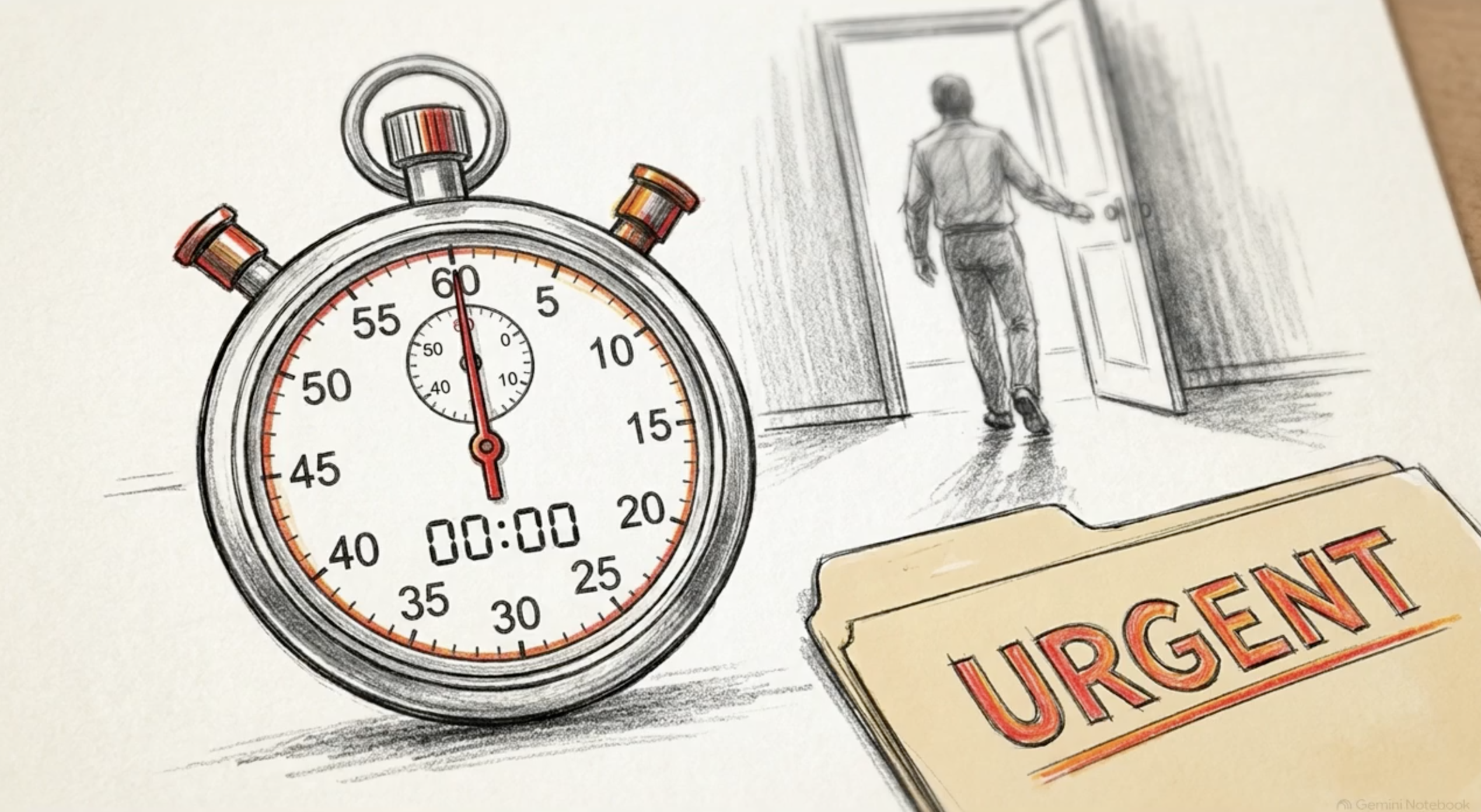
A character gets out, maybe they're fumbling with their keys, glancing over their shoulder, and then suddenly a figure just steps out of the shadows. Trench coat, fedora, the whole nine yards. He walks up, hands over this thick manila envelope, and delivers the line we have all heard a thousand times, you've been served.
[00:00:36] Speaker B: And it cut. That's the classic plot pivot. The music swells, the character looks completely devastated, and the whole story just explodes.
[00:00:42] Speaker A: Exactly. It's so dramatic, it's instant. And it's usually the end of the scene. Yeah, but have you ever really stopped to think about the logistics of that moment?
[00:00:52] Speaker B: Not really, no. You just accept it.
[00:00:54] Speaker A: I mean, in the real world, who is that guy in the trench coat? How did he know the car would be there? How did he know the person wouldn't just jump back in and drive away?
[00:01:01] Speaker B: It's one of those things that fiction makes look incredibly easy, but the reality is just incredibly complicated.
[00:01:08] Speaker A: Right?
[00:01:08] Speaker B: We gloss right over it. But that specific moment, the physical handoff of a document, that is literally the gears of the legal system starting to grind.
If that paper doesn't change hands, the lawsuit, the divorce, the eviction, well, none of it can happen. It just stops dead.
[00:01:26] Speaker A: It's the off switch for justice or.
[00:01:28] Speaker B: The on switch, you know, depending on how you look at it. It's the last mile of the legal system. And that last mile is very often the hardest one to travel.
[00:01:36] Speaker A: And that is exactly what we are unpacking today. We're doing a deep dive into the world of private process serving.
But we aren't just looking at this in the abstract.
[00:01:46] Speaker B: No, we're getting specific.
[00:01:47] Speaker A: We are zooming in on doing this job in one of the most chaotic, historically complex and geographically confusing cities in America, New Orleans.
[00:01:57] Speaker B: Which adds a layer of difficulty that's honestly hard to overstate. We're not talking about some nice, neat grid system in a midwestern suburb where every house has a lit up number.
[00:02:05] Speaker A: Not at all.
[00:02:06] Speaker B: We're talking about a city built on a swamp 300 years ago, just full of one way streets, hidden courtyards, and, you know, Mardi Gras parades. Blue blocking. The only road in or out to.
[00:02:18] Speaker A: Guide us through this swamp, both the literal one and the legal one. We've got a Stack of sources today from a company called Lafayette Process Servers llc.
We've combed through their website, their blog posts, specifically about their New Orleans operations. And we even have a transcript from a podcast called Paper Trails featuring the owner, a guy named Scott Frank.
[00:02:39] Speaker B: And what I found so fascinating going through these sources is how they frame the whole industry.
You know, we tend to think of the law as these high minded arguments in a mahogany courtroom.
[00:02:49] Speaker A: Right, with lawyers in fancy suits.
[00:02:51] Speaker B: Exactly. But Scott Frank's perspective shifts us right down to the ground level. It's all about logistics, it's about movement, it's about access.
And as we're going to see, it is very much about speed.
[00:03:02] Speaker A: So let's dive right in. The big question I had when I started reading all this was, why does this industry even exist? I mean, doesn't the sheriff do this?
[00:03:09] Speaker B: Yeah, that's the common assumption in every movie.
[00:03:12] Speaker A: If it's not a private eye, it's a deputy in a uniform.
[00:03:15] Speaker B: And technically, you're right. The sheriff's department is the default mechanism in almost every jurisdiction. The sheriff is empowered and usually mandated to serve legal papers. Okay, but here's where the reality really clashes with the theory.
If you look at that paper trails transcript, they identify this massive conflict between the public system and the private needs of a client.
[00:03:38] Speaker A: And Scott Frank mentions that the sheriff's department is, to put it mildly, overwhelmed.
[00:03:44] Speaker B: Well, think about the scale for a second. The sheriff's office isn't just serving papers. They're enforcing the law, managing the jail, patrolling the streets. And on top of all that, they're handling thousands and thousands of civil papers. Every foreclosure, every petty lawsuit, every subpoena.
[00:04:01] Speaker A: Every restraining order, all of it.
[00:04:02] Speaker B: For them, it's a volume game. They have a huge stack of papers to get through in a single shift.
[00:04:07] Speaker A: So it's a bandwidth issue. They're just drowning in paper.
[00:04:09] Speaker B: Completely. And that brings us to the keyword that really jumped out at me from the sources. When they talk about private focus, it.
[00:04:17] Speaker A: Really comes down to incentive structures, doesn't it?
[00:04:20] Speaker B: That is the crucial insight. The sheriff gets paid or, well, the department is funded, regardless of whether that specific paper is served today, tomorrow, or next week. The deputy doesn't get a bonus for catching the guy.
[00:04:32] Speaker A: But for a private entity, for a.
[00:04:33] Speaker B: Private entity like Lafayette Process servers, their reputation, their entire business model is built on getting that specific paper to that specific person. Right?
[00:04:43] Speaker A: Now, the sources describe this decision, hiring a private server versus using the sheriff as a strategic choice. I like that phrasing. It Implies it's not just a luxury, it's a calculation.
[00:04:54] Speaker B: It is a calculation. And the variable is time. And this part, this really struck me. In the data, the source mentions a potential three week wait with the public option.
[00:05:03] Speaker A: Let's just pause on that. Three weeks.
[00:05:05] Speaker B: Imagine this scenario. You're a landlord dealing with a tenant who hasn't paid rent in months. Or you're a law firm with a statute of limitations deadline creeping up.
[00:05:14] Speaker A: The clock is ticking.
[00:05:15] Speaker B: It is. So you hand the papers to the sheriff. You might wait three whole weeks just to get a notification back that says service failed.
[00:05:25] Speaker A: Three weeks of just dead air. That's brutal.
[00:05:28] Speaker B: It's paralyzed time. The whole legal process is frozen for nearly a month. You can't move forward. You can't file for a court date. You're just stuck.
[00:05:36] Speaker A: All because the deputy knocked, nobody answered, and he moved on to the next one on the pile.
[00:05:40] Speaker B: Exactly. So when Scott Frank talks about this, he's basically pitching efficiency. He's saying we treat your paper like it's the only one we have.
[00:05:48] Speaker A: And an impartial analysis supports that.
[00:05:50] Speaker B: Yeah, it's not.
[00:05:51] Speaker A: Not that the sheriff is bad at their job.
[00:05:53] Speaker B: Not at all.
[00:05:54] Speaker A: It's just that they're a broad public agency. They're hammer and sometimes you need a scalpel.
[00:05:59] Speaker B: That's a perfect way to put it. Private agencies are resource allocation specialists. They allocate their time and human effort specifically to the difficult cases that the broad public system might just brush over because they just don't have the man hours.
[00:06:12] Speaker A: Speaking of difficult cases, we have to talk about the terrain, because serving papers is one thing, but serving papers in New Orleans, that feels like a video game level set on expert mode.
[00:06:23] Speaker B: It really is. The geography of difficulty there is just. It's unique. New Orleans fights you.
[00:06:28] Speaker A: I loved the details in the source about the architecture. You know, we all love those historic New Orleans homes. The ivy, the wrought iron fences, the hidden courtyards. It's romantic.
[00:06:39] Speaker B: Totally. It's the reason people visit.
It's romantic if you're a tourist holding a beignet. If you're a process server holding a summons, that historic charm is a complete nightmare. The source specifically mentions how historic architecture often obscures address numbers, which seems like.
[00:06:57] Speaker A: Such a small detail, but I guess it's huge in this context.
[00:07:00] Speaker B: Well, it's massive. You're trying to find a specific defendant. Legally, you have to be absolutely sure. But the house numbers are missing or they're painted over, or they're hidden behind a century old oak tree that nobody's allowed to cut down.
[00:07:13] Speaker A: So you can't even confirm you're at the right house to begin with.
[00:07:16] Speaker B: Exactly. You're wandering down a dark street in the Garden District, flashlight out, trying to match a description to a house that hasn't been updated since the 1800s.
[00:07:26] Speaker A: And it's not just the buildings. Right. It's about access.
The sources highlight the gated communities of uptown.
[00:07:34] Speaker B: Right. You can't just walk up to the door and knock if there's a six foot iron gate and a keypad.
[00:07:38] Speaker A: And then you flip that to the central business district, the cbd.
[00:07:42] Speaker B: Oh, yeah, you're dealing with high rise security protocols. Front desks, key cards. You can't just wander up to the 40th floor to drop off a subpoena. You have to navigate the security guards, the concierges, the receptionists.
[00:07:55] Speaker A: And don't forget the high traffic tourist areas like the French Quarter. I mean, trying to park a car and legally serve someone in the middle of a crowded Friday night on Bourbon street, that sounds impossible.
[00:08:06] Speaker B: It's a huge logistical hurdle. A sheriff's deputy with a thousand other papers to serve might look at that chaos, the tourists, the. The road closures, the lack of parking, and just say, you know what? I'll try again next week when it's quieter.
[00:08:18] Speaker A: But the private server is paid to figure out the parking.
[00:08:22] Speaker B: They are paid to solve the maze, even if it means walking three blocks in the rain because there was no parking closer.
[00:08:28] Speaker A: There's another layer to this maze that I found really interesting. The parish line.
To an outsider, or even a casual visitor, the New Orleans area might just look like one big sprawl.
You cross a street like Canal street or drive under an overpass, and you might not even realize you've left the city.
[00:08:46] Speaker B: But legally, you have absolutely crossed a border. This is a crucial technical detail that the sources really hammered home. New Orleans is an Orleans parish. But Metairie, Kenner, Gretna, those are typically Jefferson Parish.
[00:09:00] Speaker A: And the source says these are two.
[00:09:01] Speaker B: Different worlds, Legally, completely different worlds.
[00:09:04] Speaker A: Break that down for us. What does that mean for the guy holding the papers? Why does the geography matter to the paperwork?
[00:09:10] Speaker B: So Orleans Parish uses the first city court. That's downtown. It's urban, complex. It has its own rules, its own filing fees, its own clerks. Then you cross that parish line into Jefferson Parish and you're dealing with justice of the Peace courts.
[00:09:24] Speaker A: Justice of the Peace. Sounds very old fashioned, like something from a Western.
[00:09:30] Speaker B: It can be a bit more informal, but the procedures are totally distinct. The clerks are different People, the filing requirements are different. Scott Frank points out that they know the clerks, they know the judges, and maybe most importantly, they know the parking situations at each of those distinct courthouses.
[00:09:47] Speaker A: It's funny how often parking comes up in these sources, but it makes so much sense. If you can't park, you can't file the affidavit.
[00:09:53] Speaker B: It's the unglamorous reality of the job. It's like 10% legal knowledge and 90% logistical maneuvering. If you don't know where the loading zone is at the first city court, you might get towed while you're inside filing the proof of service.
[00:10:07] Speaker A: That kills your profit margin pretty fast.
[00:10:09] Speaker B: It sure does. And the sources mention that Lafayette Process Servers has set themselves up physically to handle this split. They have an office at 1 Galerie of Les Vie in Metairie, and that's a strategic placement. Oh, yeah. Metairie is the bridge.
From that office, they can cover Jefferson Parish efficiently. Places like Can, Kenner, Gretna, Weswego, but they're still close enough to just run downtown. For Orleans Parish filings, it's a hub and spoke model designed for this specific dual parish complexity.
[00:10:37] Speaker A: So we've got the sheriff being overwhelmed, and we've got the city being amazed. But let's look at the human element, because papers don't serve themselves and people don't always want to be served.
[00:10:47] Speaker B: That's putting it lightly.
[00:10:49] Speaker A: What happens if the person just hides? I mean, people. People dodge lawsuits all the time, right?
[00:10:54] Speaker B: This is where we move from logistics into what looks a lot more like investigation. The source brings up the concept of skip tracing.
[00:11:00] Speaker A: Skip tracing? It sounds like something from a spy movie.
We need to put a skip trace on him.
[00:11:05] Speaker B: It does sound cool, doesn't it? It's essentially the art of locating a person who has skipped town or is otherwise actively dodging service.
[00:11:12] Speaker A: And how does that differ from what the sheriff does?
[00:11:14] Speaker B: The sheriff typically operates just on the information the plaintiff gives them. The lawyer says he lives at 123 Main Street. The sheriff goes to 123 Main Street.
[00:11:24] Speaker A: And if he's not there, if the.
[00:11:25] Speaker B: Person isn't there or doesn't answer, the sheriff might try again, or they might just return it as unserved. They aren't investigators, they're messengers. They don't really have the time to sit on a house or dig through public records.
[00:11:39] Speaker A: Whereas a private server.
[00:11:40] Speaker B: A private server is using databases, utility records, social connections, all sorts of things to find where the person actually is, not just where they say they are.
[00:11:51] Speaker A: There was a really Specific case study in the source material about this, The Sarah J. Testimonial. I think this really paints the picture.
[00:11:58] Speaker B: Oh, yeah, the paralegal.
[00:12:00] Speaker A: Right. So Sarah J. Writes that they had this defendant who was dodging service for weeks. The sheriff had already returned the papers unserved twice.
Basically, the guy was ghosting the entire legal system.
[00:12:11] Speaker B: He knew they were coming, and he was making sure he wasn't going to.
[00:12:14] Speaker A: Be found, which for the plaintiff is incredibly frustrating. You can't even start your case. You're just in limbo, total limbo. So they hire Scott Frank and his team, and according to the testimonial, they found the guy at a secondary address in Algiers within 48 hours.
[00:12:30] Speaker B: 48 hours. That's the value of the skip trace. The sheriff went to the primary address, probably the one on his driver's license or an old lease.
[00:12:38] Speaker A: The obvious place.
[00:12:39] Speaker B: The obvious place.
The private team dug deeper and found the secondary address.
Maybe it was a girlfriend's house or a rental property or a parent's home. That's the aha moment. Knowing where to look when the obvious answer fails.
[00:12:53] Speaker A: Finding them is only half the battle, isn't it? You have to prove you actually gave them the papers. And this is where the whole technology aspect comes in. Because in the old days, it was just your word against theirs.
[00:13:03] Speaker B: And this is a major differentiator they mentioned in the sources, the old school way, and often still, the sheriff's way is just a signature or a basic return of service. But Lafayette Process Servers emphasizes GPS verification.
[00:13:17] Speaker A: How does that work exactly? Is it like a body cam?
[00:13:20] Speaker B: It's usually app based. They use software that records the exact GPS coordinates, the date and the time right at the moment the service happens. It creates an unalterable digital footprint of the entire interaction.
[00:13:33] Speaker A: The source contrasted this with the sheriff sometimes just posting it and leaving.
[00:13:37] Speaker B: Right. And posting creates this massive loophole. It means taping the summons to the door or just leaving it on the porch, which can be legally valid in some cases, but it's weak.
[00:13:47] Speaker A: Why is it weak?
[00:13:48] Speaker B: It's just so easy for a defendant to say, the wind blew it away or I never saw it, or some neighborhood kid must have torn it down. And if the judge believes them, the service is voided and you have to start all over again.
[00:13:59] Speaker A: But if you have a GPS stamp and a photo of the handoff at a specific coordinate, it's pretty hard to.
[00:14:05] Speaker B: Argue with a satellite. You can't say you weren't there. If the GPS puts the server at your front door at 8.42pm on a Tuesday.
[00:14:12] Speaker A: It actively closes the loop.
[00:14:14] Speaker B: It protects the due process, and that leads to the affidavit of service. The source notes that this is the notarized document they provide. It's admissible in court. It is the shield for the client.
[00:14:25] Speaker A: So if the defendant shows up and says, I didn't know about this hearing.
[00:14:28] Speaker B: The lawyer just pulls out that affidavit with the. The GPS data attached and, you know, argument over.
[00:14:34] Speaker A: It's basically receipts for the legal world.
[00:14:36] Speaker B: Exactly what it is.
[00:14:37] Speaker A: Now, we've been talking a lot about how effective these guys are, but in an industry like this, trust has to be everything.
You're handing over sensitive legal documents. You're trusting this person to represent your firm. How do they prove they aren't just some guy with a printer and a car?
[00:14:52] Speaker B: That is a great point.
And the source material spends a lot of real estate establishing what we'd call signals of credibility.
[00:15:01] Speaker A: I noticed the list of memberships. It wasn't just, we're good, it was really specific.
[00:15:06] Speaker B: Right. They list being BBB accredited and patch verified. But more importantly, I think they list their chamber of commerce memberships and not just one. They're members in New Orleans, Jefferson, St. Tammany and St. Bernard parishes.
[00:15:20] Speaker A: That signals that they're really embedded in the local business community. They aren't some fly by night operation.
[00:15:25] Speaker B: Exactly. It shows they're a legitimate operational entity across the entire region. They're paying dues. They're showing up. And there was another interesting signal in that paper Trails podcast transcript.
[00:15:35] Speaker A: The sponsorship.
[00:15:37] Speaker B: Yes.
[00:15:37] Speaker A: Yeah.
[00:15:37] Speaker B: The episode is sponsored by 337 Media. Now, on the surface, that's just an ad, but if you look deeper, 337 Media is a local SEO and website company for Acadiana brands.
[00:15:50] Speaker A: Ah, so it shows a network.
[00:15:52] Speaker B: It shows a network. Scott Frank isn't operating in a silo. He's part of a local business ecosystem. He has professional marketing, professional web support. It just adds a layer of professionalism that separates a gig worker from a real logistics firm.
[00:16:04] Speaker A: It shows stability.
[00:16:05] Speaker B: Precisely.
[00:16:06] Speaker A: And speaking of professionalism, we had to talk about the disclaimer. It is plastered all over the source material. You really can't miss it.
[00:16:13] Speaker B: It is, and for very good reason. We are not attorneys and cannot provide.
[00:16:17] Speaker A: Legal advice, and we do not represent anyone before the SEC or irs.
[00:16:22] Speaker B: This boundary is absolutely vital. It tells you and the potential client exactly what lane they're in. There are logistics exper. They are not legal scholars.
[00:16:31] Speaker A: So if you call them asking, how do I win? My eviction case. Or does this contract look solid?
They're going to stop you right there, Correct?
[00:16:39] Speaker B: Their job is to deliver the eviction notice, not to argue the merits of the eviction in court. They handle the physical delivery, not the legal argument. That distinction is what protects them and the client from crossing serious ethical and legal lines.
[00:16:54] Speaker A: An authorized practice of law.
[00:16:55] Speaker B: It's a very serious issue. And these disclaimers are their way of saying law. Look, we run the papers, we don't write them.
[00:17:02] Speaker A: It's a crucial separation of church and state, so to speak. The runners versus the thinkers.
[00:17:07] Speaker B: Although, as we've discussed, the running requires quite a bit of thinking, too. You have to outsmart the person hiding, outsmart the traffic, and outsmart the architecture.
[00:17:15] Speaker A: That's a great segue to wrap this up. So what does this all mean? We started with the movie scene, the guy in the trench coat. But what we found is this highly technical, geographically specific logistics operation.
[00:17:28] Speaker B: Well, if we connect this to the bigger picture, it's a realization that the law has a physical component. We think of the law as these abstract rights, constitutions, words on paper.
But for those rights to be enforced, a physical object, the document, has to move from point A to point B.
[00:17:46] Speaker A: And in a city like New Orleans, moving from point A to point B is a really complex challenge.
[00:17:52] Speaker B: It's the last mile problem, just like you see with Amazon delivery, but with much, much higher stakes. If Amazon loses your package, get a refund.
[00:18:00] Speaker A: If the process server loses your papers, you lose your day in court.
[00:18:04] Speaker B: Exactly. And the aha moment for me is realizing how the physical landscape of a city, the gated communities, the confusing architecture of the French Quarter, the swampy terrain, how that directly impacts the speed of.
[00:18:17] Speaker A: Justice, it creates a niche.
[00:18:18] Speaker B: It creates a niche because the public system, the sheriff, is designed for the average case, not for the difficult geography.
[00:18:24] Speaker A: So. Scott Franken, Lafayette. Process servers exist to fill the gap that the architecture and the sheer volume create.
[00:18:30] Speaker B: They're selling certainty and speed in what is otherwise a very uncertain and slow environment.
[00:18:35] Speaker A: It really makes you think about all the hidden machinery of society.
[00:18:38] Speaker B: It does. It makes you realize how fragile the system really is. You know, relying on someone finding a house number hidden behind an ivy vine.
[00:18:46] Speaker A: So here's a provocative thought to leave you with. We talked about the share versus private dynamic. The sheriff is affordable but overwhelmed and slow. The private server is a strategic choice for speed and focus, but it costs money.
If the public system is so overwhelmed that you have to hire a private company to get your lawsuit started in a reasonable time.
Are we seeing a privatization of legal efficiency?
[00:19:14] Speaker B: That is the big question. Is speedy justice becoming a premium service that you have to pay extra for.
[00:19:19] Speaker A: Something to chew on the next time you see illegal drama and someone gets handed an envelope? Who paid that guy? And how long did he have to wait for a parking spot?
[00:19:26] Speaker B: And did he get a GPS stamp?
[00:19:28] Speaker A: Exactly.
Thanks for listening to this deep dive into the logistics of the Big Easy. We'll catch you on the next one.